If you want piano improvisation for beginners to feel useful at the keyboard, start with a few chords and a small set of notes, not a promise that you will sound like a jazz pianist. Improvisation in this guide means making a short musical idea over a simple harmony, at a tempo you can keep. It is a practice skill, like scales or sight-reading, and it works on a regular digital piano as well as on a smart piano. The steps below stay with patterns you can use tonight, and they point to finished-song and accompaniment articles already on this site instead of repeating them.

The short answer on piano improvisation for beginners
Beginners can improvise usefully over a few chords.
The skill is built with a small note set, a slow pulse, and short takes, not with a talent test or a jazz-player claim.
You do not need a huge theory map to start. Two or three chords, a steady beat, and a right-hand pattern that stays inside a scale fragment are enough for a first session. The point is to hear yourself invent a phrase and then repeat or vary it, not to fill every beat with new notes. If a take falls apart, slow down or use fewer notes. That is still improvisation, and it is more useful than racing through a flashy line you cannot control.
Teachers who work with adult beginners often treat improvisation as a short, repeatable drill rather than a performance exam. Groups such as the Music Teachers National Association discuss how everyday practice skills transfer into musical confidence, and the National Association of Music Merchants follows the instruments and learning tools people actually bring home. Use those as background, then keep your own session small and specific.
A tiny harmonic frame: two or three chords and a slow pulse
Give your left hand a small chord loop before you invent a melody.
A two- or three-chord frame, played slowly, is easier to hear and easier to reuse than a long progression you cannot yet hold.
A practical starting frame is a tonic chord and a nearby related chord, such as C major to G major, or C major to A minor, in whatever key sits comfortably under your hands. Add a third chord only after the first two feel automatic. Play the loop at a walking pace, even if that pace feels almost too slow. The harmony should still be obvious when you close your eyes, because your right hand will need that grid in order to choose notes that fit.
Keep the pulse honest. Count out loud, tap your foot, or use a metronome once the chords are familiar. If the left hand rushes, the right hand will chase it, and the take will sound busy rather than musical. One or two minutes of repeating the same frame is not wasted time; it is how the ear learns where the chord changes sit. When the loop is stable, you have a place to improvise, which is different from hunting for new chords every few seconds.
Right-hand starting patterns that stay inside a small set of notes
Limit the right hand to a few notes that belong to the chords.
A small set is easier to control, and it still leaves room for rhythm, repetition, and a short answering phrase.
Pick three to five notes from the scale that matches your chord frame. In a simple C major loop, C, D, E, G, and A are already plenty. Play them slowly as a five-note row, then start making short shapes: a three-note rise, a three-note fall, or two notes that rock back and forth. Repeat a shape before you invent a new one. Repetition is what makes an improvised line sound like a phrase instead of a string of guesses.
Stay inside the set even when you feel bored. Boredom in the first week usually means the rhythm is still stiff, not that you have run out of music. Change the rhythm of the same notes: long-short, a rest on beat one, or a repeated note that waits for the chord change. If you jump to too many extra tones too soon, you will spend the take correcting clashes instead of hearing a melody. The goal is a pattern you can use over chords, not a complete jazz vocabulary.
Left-hand options that do not fight the melody
Keep the left hand simple so the melody has room.
A held chord, a slow broken chord, or a light bass note on the first beat is usually enough at the beginning.
A common beginner mistake is to give the left hand a busy figure while the right hand is also inventing. The two parts then compete, and both sound unclear. Start with block chords in a calm rhythm, or hold each chord for a full bar. If you want a little motion, break the chord slowly from the bottom note upward, and return to the same pattern every bar so the right hand can predict it.
Leave space on the beats where the right-hand phrase needs to speak. If the melody has a long note, the left hand can simply wait. If the melody is moving, the left hand can stay still. This is also a good moment to remember that accompaniment patterns already have their own article on this site; this session is about leaving air for an improvised line, not about building a denser backing track. When the left hand is predictable, you can listen, which is the skill improvisation actually trains.
Improvisation is not the same as reading a finished piece
Improvising invents a phrase; reading a finished piece follows a written one.
Both belong in a beginner routine, and they should stay in their own lanes so one skill does not swallow the other.
A written song has a melody that already works. Your job is to play it as written, or as close as you can, which is why a list of easy piano songs for beginners is a different kind of practice. Improvisation uses some of the same notes and chords, but it asks you to choose what happens next. That choice can be tiny: repeat the same three notes, or change only the last one. The musical risk is small on purpose.
Accompaniment is a third skill. A left-hand groove that supports a written or sung melody is covered in the existing guide to piano accompaniment patterns for beginners. Use that article when you want rhythm patterns that stay under a song. Do not copy those patterns wholesale into this improvisation session, or the two pages will start to do the same job. If you are deciding how to split a week of practice among songs, accompaniment, and short improvised takes, the complete beginner piano practice guide is the better place to build a routine.
A metronome, a slow tempo, and knowing when to stop a take
A slow, steady tempo makes improvisation easier to hear and easier to improve.
Stop a take when the pulse slips, or when you run out of a clear idea, instead of playing through a muddy finish.
Set a tempo that lets you place every chord change on time. If you cannot sing or hum a simple rhythm at that speed, it is still too fast. Play four or eight bars, then pause. Listen back if your instrument or app can record a short take, or just sit for a moment and notice whether the last phrase had a beginning and an end. A clean eight-bar take at a slow tempo is worth more than a long ramble.
Decide in advance how you will stop. One useful rule is to end on a note that belongs to the last chord, then rest. Another is to repeat your opening shape as a closing echo. If you feel lost, return to the original three-note pattern and finish there. Stopping on purpose is part of the skill, and it is closer to how careful daily practice works than to an endless stream you cannot edit. For general official U.S. government starting points, USA.gov collects public resources, and the Piano Technicians Guild is a useful reminder that acoustic-piano care is a different profession; a digital piano still rewards the same patience and a setup you can repeat.
A smart piano or app can help you stay in time
Lights and apps are timing aids, not improvisation itself.
Use them to hold a pulse or to check a chord, then turn the guidance off when you want to invent a phrase.
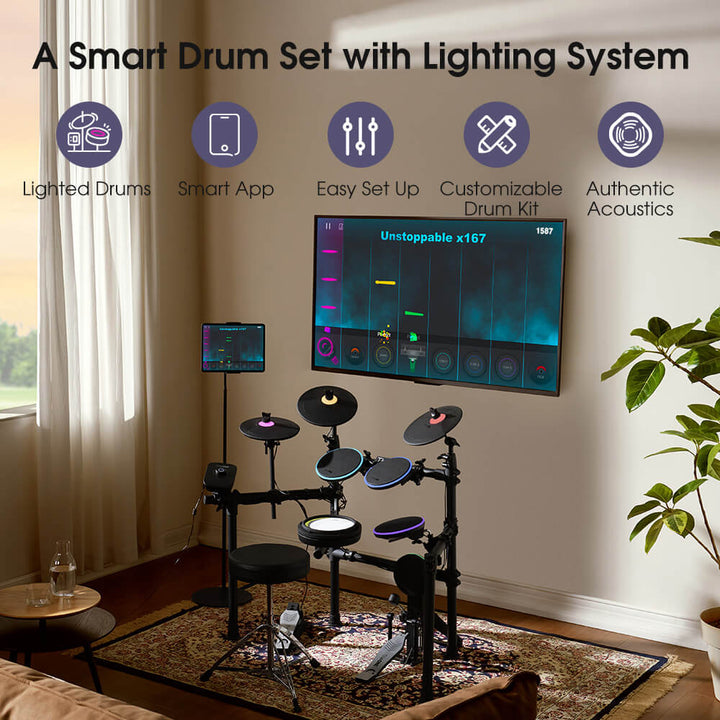
A metronome click, a simple drum loop, or a practice app can keep your beat honest while you improvise. Some smart pianos also use lighted keys to show a written lesson or a song path. Those lights can help you stay in time during a guided piece, but following lights is still a form of reading, not improvisation. When you switch to an improvised take, let the lights rest and listen to the chord frame instead. The Smart Piano app guide and the official smart piano overview explain how the app and lighted-key tools work; use them as practice support, not as a substitute for choosing notes.

If you use a MIDI connection later to record into other software, keep the same modest goal: one short take, then a listen. An overview of what MIDI is for sits at the MIDI Association’s MIDI introduction. The technical link is optional at this stage. A phone voice memo of your eight-bar phrase is already enough feedback for a beginner session.
FAQ
Can a complete beginner improvise on a piano?
Yes. A beginner can improvise in a useful way by limiting the session to two or three chords and a small set of right-hand notes. The first goal is a short, clear phrase at a slow tempo, not a finished solo and not a jazz style. If the pulse slips, use fewer notes or a simpler left-hand pattern until the take holds together. Treat improvisation as a practice skill you can repeat, the same way you repeat a scale or a short written song, rather than as a test of natural talent.
Is piano improvisation the same as jazz improvisation?
No. Jazz improvisation is a specific musical language with its own vocabulary, repertoire, and listening habits, and this guide does not claim that a few beginner patterns will turn you into a jazz player. The patterns here are general tools for making a melody over simple chords at home. You can later study jazz with a teacher, recordings, and a method designed for that style if you want that path. Until then, keep the sessions modest so the skill you are actually training is clear phrasing over a small harmonic frame.
Should I use lighted keys when I improvise?
Use lighted keys when you are learning a written lesson or checking a fingering, then turn that guidance off for an improvised take. Lights can help you stay in time during a guided song, but following them is still a form of reading. Improvisation asks you to choose the next note from a small set you already know, while you listen to the chord loop. A metronome, a slow tempo, or an app click can still support the beat without telling you which keys to press. Keep the two activities separate so each one can improve.
How is improvisation different from accompaniment patterns or easy songs?
Improvisation invents a short melody over a chord frame you already understand. Easy-song practice follows a written melody, and accompaniment practice builds a left-hand rhythm that supports a song without covering it. Those last two skills already have their own articles on this site, so this session should not copy them. A good weekly routine can include all three, in short blocks, as long as each block has a clear job. If a practice plan would help you keep those jobs from blending together, use the beginner practice guide rather than stretching one exercise into all three roles.
Next step: the beginner practice guide and easy-songs article
When you can play one slow eight-bar take over a two-chord loop, put that drill into a wider routine with the beginner piano practice guide and keep a written melody in the mix with easy piano songs for beginners. If you later want a left-hand groove under a finished song, open the accompaniment-pattern article rather than forcing that job into improvisation practice. There is no hard sell here: a short, honest take at a tempo you can keep is the next step that matters.
Start with two chords, a small right-hand pattern, and one slow take you can finish on purpose.