
To record vocals and digital piano at home, first decide whether you need a simple live document or separately editable tracks. Capture the singer with a microphone and the piano through its documented audio output, USB audio connection or microphones. MIDI alone records performance instructions, not the piano’s finished sound. Test the complete path before buying extra gear.
Minimum recording decisions
- Choose one live stereo file or separate voice and piano tracks.
- Confirm whether the piano connection carries audio, MIDI or both.
- Use an audio interface when the computer lacks the required inputs.
- Monitor through a wired path to avoid distracting delay.
- Record a loud rehearsal section and leave headroom before the real take.
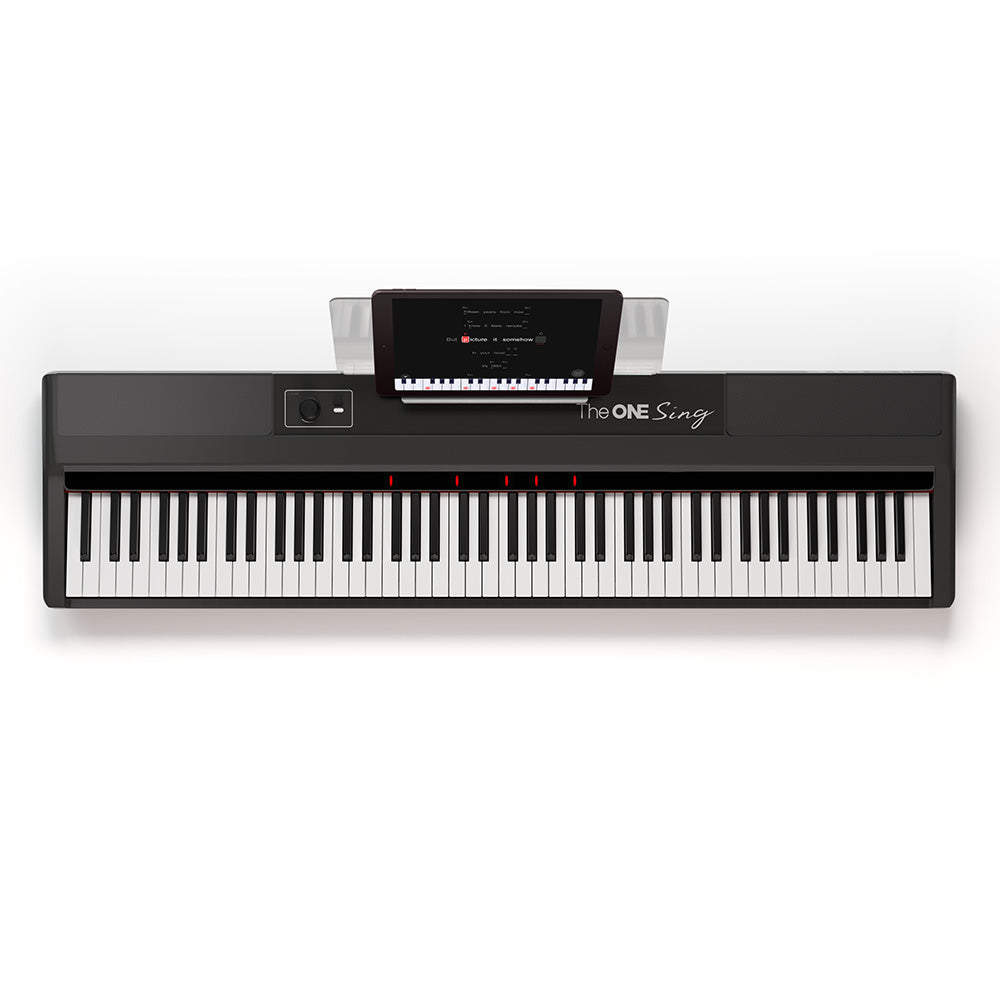
Should you record live or use separate tracks?
A phone or recorder placed in the room is the simplest way to document a performance, but voice, piano and room sound are permanently combined. Multitrack recording places the vocal and piano on separate tracks, allowing level, timing and tone adjustments later. It usually requires more inputs, cables and setup discipline.
For a first demo, use the least complicated method that meets the goal. Do not build a studio when the real need is to hear the song structure.
What signal is the digital piano actually sending?
| Source | What it captures | Main check |
|---|---|---|
| Line or headphone output | The piano’s generated audio | Correct cable, level and stereo/mono routing |
| USB audio | Digital audio if the model supports it | Manual, driver and input selection |
| USB MIDI | Notes, timing, velocity and controls | A virtual instrument is needed to create sound |
| Room microphones | Speakers, voice and room together | Placement, noise and bleed |
Never infer audio-over-USB from a USB connector. Read the current manual and test the actual computer.
Build the smallest multitrack path
- Connect the vocal microphone to a suitable interface input.
- Connect the piano’s documented audio output to one or two line inputs.
- Select the interface in the recording software.
- Create a mono vocal track and the appropriate mono or stereo piano track.
- Enable direct or low-latency monitoring where supported.
- Record a synchronized clap or clear first chord if alignment may be needed.
Do not connect a powered speaker output to an input not designed for it. Match connection types and levels according to both manuals.
How should you set recording gain?
Sing the strongest chorus and play the fullest chord pattern. Raise input gain until the recording is healthy but does not clip. Leave room for a more energetic take. Piano volume, output level, interface gain and software fader are different controls; change one at a time and document the working position.
If noise is high, move closer to the microphone appropriately, reduce room noise and check cables before applying aggressive processing.
Control bleed and monitoring
Use closed-back headphones when separate tracks matter. Piano speakers entering the vocal microphone make later editing harder. Place the microphone so the singer can maintain comfortable posture while playing. Keep it away from key impact, computer fans and reflective walls when possible.
Latency can alter timing and vocal phrasing. Monitor directly through the interface or use a tested low-buffer path. Bluetooth monitoring is rarely the simplest choice for synchronized performance.
Run a one-minute technical take
Record speech, a quiet verse, the loudest chorus, sustain pedal and silence. Listen on headphones and ordinary speakers. Check clipping, hum, missing stereo channels, delay, pedal noise and whether the words remain clear over the piano. Fix the largest problem before recording a full song.
Name and back up the session with sample rate, interface and input notes. Keep the original unprocessed files before editing.
Should voice and piano be performed together or overdubbed?
Recording voice and piano together preserves interaction, but a mistake in either part affects the take and microphones may capture bleed. Recording piano first and vocals later provides cleaner editing, but the singer must respond to a fixed accompaniment.
Test both with one verse. If overdubbing feels rigid, record a quiet guide vocal while playing piano, then replace it. If simultaneous playing is stronger, accept controlled bleed and focus on placement and performance rather than forcing complete separation.
Frequently asked questions
Can you record piano and vocals with one microphone?
Yes for a live room capture, but balance and separation must be solved during performance and placement.
Is MIDI better than audio?
It serves a different purpose. MIDI enables later sound editing; audio captures the actual piano sound path.
Do you need an audio interface?
Not for every simple recording, but it is often needed for XLR microphones and line-level piano inputs.