
A six year old can want a piano very much and still be unable to play it, because their feet do not reach the pedals, their hands cannot stretch an octave, and the keyboard in the showroom is at adult height. The instrument is not the problem; the setup is.
This guide is about physical fit rather than about which model is best. If the keyboard, stand and seat are arranged for a small player, a six year old can start properly; if they are not, even a good instrument will be played awkwardly and then abandoned.
The models and accessories referenced are TheONE products; current specifications and pricing are shown on each product page.
What a six year old needs from a piano
Three things, none of which is a specification on a product page. Keys of the standard size, so fingers learn the real distances. A height that lets the child sit with feet supported and forearms level. And a note range that covers what they will play for the next few years, which is narrower than most parents expect.
Standard key size matters more than any feature. A small child on a smaller keyboard learns distances that do not transfer, and the instrument becomes unusable as they grow. Full-size keys on a 61-key instrument are the correct choice for almost every six year old.
The second requirement is less obvious. Children this age are still developing the coordination to hold a curved hand position, and they manage it for a few minutes rather than half an hour. Anything that adds physical awkwardness shortens that window further, which is why the seat and stand matter more at six than at sixteen.
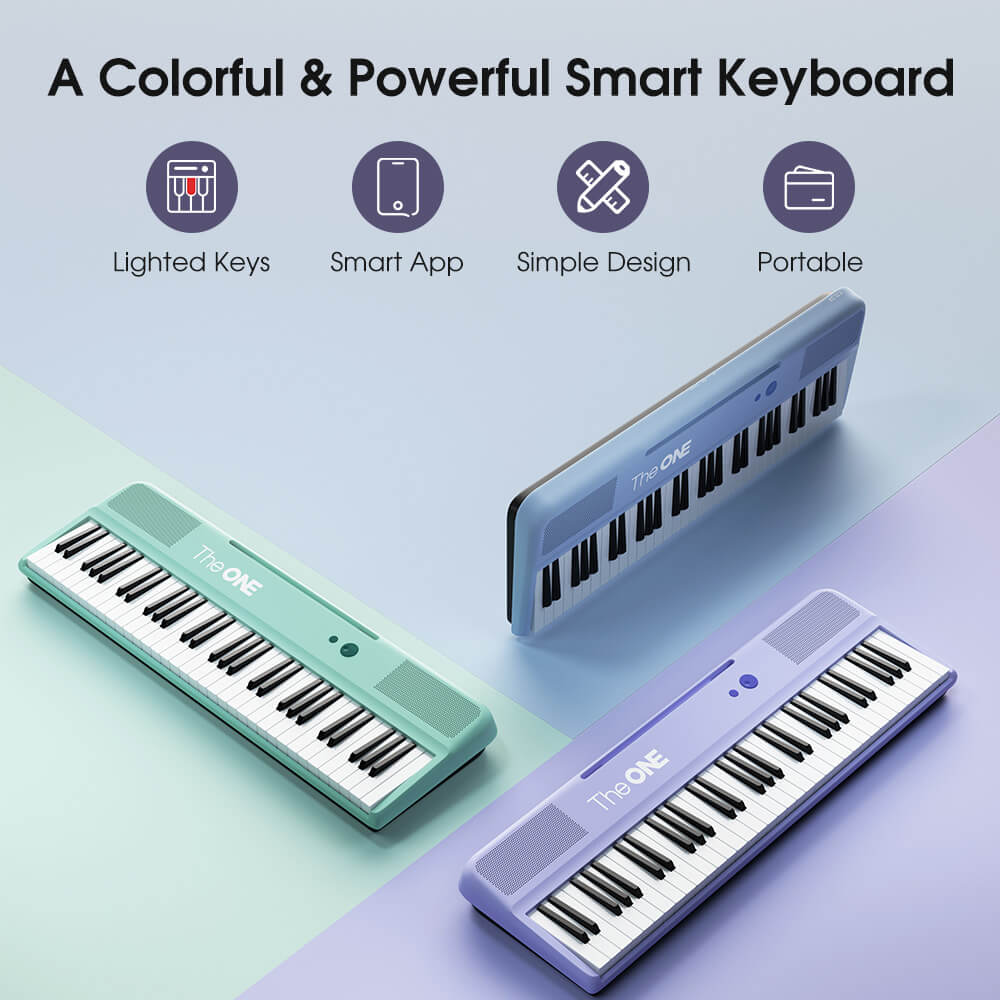
What size piano fits a six year old?
A 61-key portable instrument on an adjustable stand.
That combination covers the first few years of material, weighs little enough to move, and lets the height change as the child grows. A console piano at adult height is the wrong shape for a six year old, whatever its specification.
The adjustable stand is what makes this work, and it is the part parents most often skip. It should go low enough that the childs forearms sit roughly level with the keys when their shoulders are relaxed. If the stand bottoms out before that point, the child will play with raised shoulders, and that habit is harder to correct later than it is to prevent now.
The seat is the other half. A child whose feet dangle will slide backwards to stabilise themselves and then lean forward to reach, which builds the wrong posture from the first lesson. A stool or bench that puts both feet flat, plus a small footrest if the bench will not go low enough, solves it, and the measurements are in the piano bench height guide.
61 keys or 88 keys for a six year old?
61 keys, unless lessons have already specified otherwise.
Material for this age stays inside a five-finger position and never approaches the ends of the keyboard, so a 61-key instrument removes nothing from the first years of learning and is far easier to place in a bedroom.
The exception is a family already committed to a teacher who has specified a full-range instrument, in which case the decision has been made by someone with more information and should be followed. For everyone else, the 88-key question belongs to the point where graded repertoire arrives, which is several years away.
There is a practical argument for waiting that has nothing to do with money. A six year old is still deciding what they enjoy, and a portable 61-key instrument that fits on a stand can move rooms, travel to grandparents, or be put away during a fallow month without any of that being a setback. Smart piano for kids covers the wider version of this decision.
| Portable 61-key | Weighted 88-key | |
|---|---|---|
| Fits a six year old now | Yes, on an adjustable stand | Height depends on the stand and cabinet |
| Moves between rooms | Easily | With help, or not at all |
| Covers beginner material | Yes, for several years | Yes, and beyond |
| Right moment to buy | The first instrument | When the habit is established |
Setting the height so they can actually play
Set the stand first, then the seat, and check both with the child sitting rather than standing beside it. Forearms roughly level with the keys, both feet supported, and enough distance that their elbows are not pinned against their ribs. Those are the same checks an adult uses, and the same reasons for making them: neutral positions are what keep repeated movement comfortable, the principle the Canadian Centre for Occupational Health and Safety describes for seated work and BAPAM applies to musicians.
Then review it every few months, because a child grows several centimetres a year and a setup that worked in September can be wrong by March. Two minutes with the stand and a stool is the whole maintenance schedule, and it is the cheapest way to keep a young player comfortable.
Sessions should stay short at this age, five to ten minutes most days rather than a long weekend block, which also keeps the physical demands modest. If your child uses headphones at all, keep the level low enough that they can hear you across the room, the practical form of the NIDCD guidance on noise-induced hearing loss and the WHO listening-safety programme.
What to avoid when buying for a six year old
Avoid toy keyboards with smaller keys, however appealing the packaging. They teach distances that do not transfer and are usually outgrown within a year. Avoid buying at adult height with the intention of adjusting later, because the adjustment rarely happens and the first months are the ones that decide whether the habit forms.
Avoid committing to a cabinet piano before the child has shown consistent interest. And avoid treating the instrument as the thing that will keep them playing: what keeps a six year old at a piano is short sessions, something that marks their progress, and being able to play music they chose. Graded material such as the Royal Conservatory of Music levels can wait until the habit exists.
FAQ
What size piano should a 6 year old have?
A 61-key instrument with full-size keys, on a stand that adjusts low enough for their height. Full-size keys matter because the distances they learn need to transfer as they grow, and the adjustable stand is what puts the keyboard at the right height now.
Can a 6 year old reach piano pedals?
Usually not, and it does not matter at this stage. Pedal enters the repertoire later, and a child whose feet do not reach should have them supported flat on the floor or a footrest instead of stretching towards a pedal they cannot use yet.
Do I need to raise the piano as my child grows?
Yes, and the check takes two minutes. Set the stand so forearms sit level with the keys with both feet supported, then repeat the check every few months, because a child can grow enough in one school year to make a good setup uncomfortable.
Next step
Set the stand and the seat with the child sitting, not standing beside it, then let them play for five minutes and watch whether their shoulders stay relaxed. If they do, the fit is right, and that will matter more than any other specification you compared.
Shipping and returns in short. TheONE ships free within the 48 contiguous United States, with orders usually processed in 1–3 business days and delivery estimated at 3–7 business days after dispatch. International delivery is estimated at 5–15 business days, with shipping and applicable taxes included in the price shown at checkout. Returns within the United States can be requested within 30 calendar days of receipt and require approval.
See the portable keyboards and the adjustable stands sized for younger players.
For the wider decision about a first instrument for a child, best smart piano for beginners sets out the shortlist, and if drums are also on the table, electronic drum set for kids covers reach and sizing for the same age group.


