
Collection: Upright Digital Piano

-

Free & Fast Shipping
-

ONE Year Warranty
-

Easy Return & Refund
-

Lifetime Support
-
The ONE TOP2 Smart Piano Pro, Escapement 88 Keys Graded Hammer Action Weighted Home Piano
20% OFFRegular price From $1,199.00Sale price From $1,199.00 Regular priceUnit price per$1,499.00Sale -
The ONE TOP1X Smart Piano, Graded Hammer Action Weighted Piano,Light up Home Piano for Pros
23% OFFRegular price From $999.00Sale price From $999.00 Regular priceUnit price per$1,299.00Sale -
The ONE PLAY Smart Piano, 88 Keys Graded Hammer Action Weighted Piano with Bluetooth for Beginners
27% OFFRegular price From $799.00Sale price From $799.00 Regular priceUnit price per$1,099.00Sale


🎹 Which Upright Digital Piano Is Right for You
Upright Digital Pianos for a Dedicated Home Practice Space
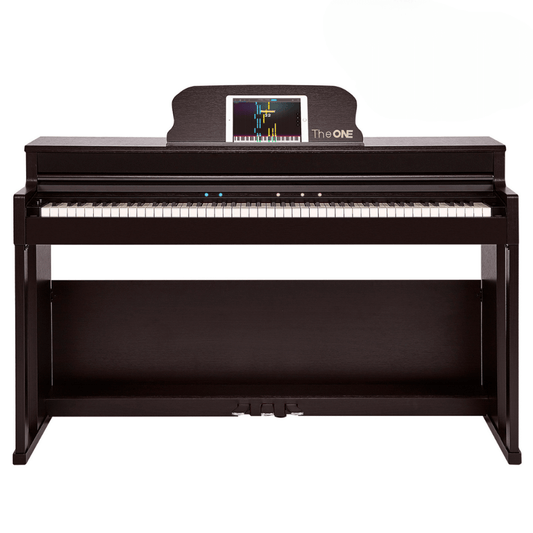
Some players do not want a keyboard that gets packed away after every session. They want an instrument that belongs in the room, feels ready whenever they sit down, and supports long-term progress. This TheONE collection focuses on upright digital pianos designed for home practice, combining 88-key layouts, weighted touch, graded hammer action, smart learning support, lighted keys guidance, and furniture-style presence.
Three Home Pianos for Different Stages of Growth
The biggest advantage of a home digital piano is consistency. When the instrument has its own place, practice becomes easier to repeat. There is no need to unfold a stand, reconnect everything, or turn music time into setup time.
For a Full-Size Starting Point: The TheONE PLAY Smart Piano is a practical starting point for beginners, retaining Bluetooth connectivity and guided learning for everyday home practice.
For Stronger Daily Practice: The TheONE TOP1X Smart Piano is designed for players who want a more advanced home piano experience. With 128-note polyphony, a 44.1 kHz audio sampling rate, upgraded bass speakers, and a broader sound range than PLAY, it is a strong choice for regular practice.
For a Premium Upright Feel: The TheONE TOP2 Smart Piano Pro adds synthetic ivory keys and an escapement mechanism that more closely recreates the response of an acoustic piano action. Its upgraded sound system and more refined playing feel suit premium upright practice.
Weighted Touch and Guided Learning Work Together
All three models provide a full 88-key digital piano foundation with weighted keys. The distinction between them is not whether weighted touch is present, but how the keyboard action, sound system, cabinet design, and advanced features support different levels of progress.
Graded hammer action helps the lower and upper registers respond more like a traditional piano, while lighted keys give learners visual support when working through songs, exercises, and hand coordination.
A Permanent Setup Can Encourage Consistent Practice
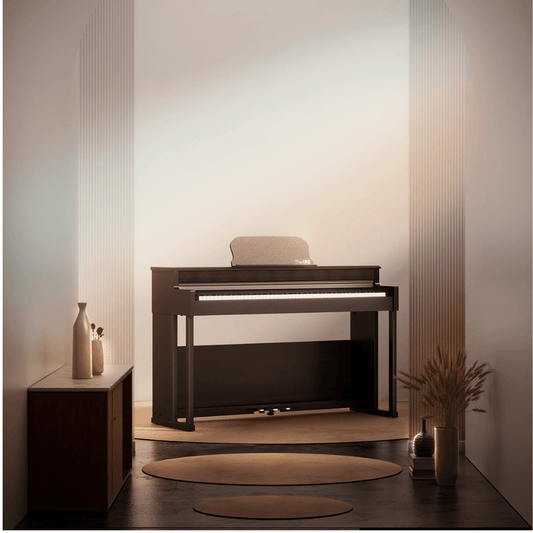
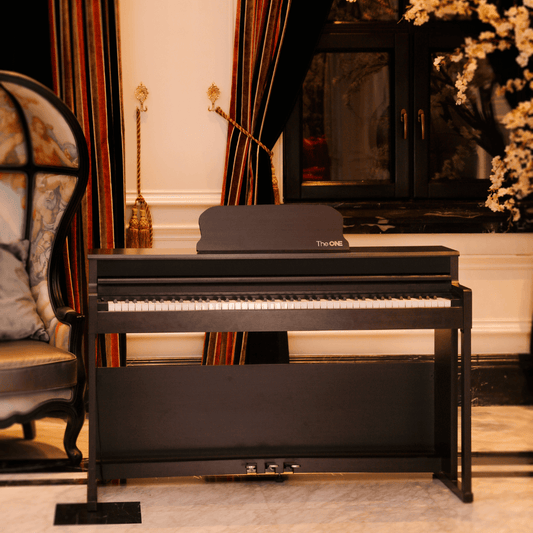
A furniture-style instrument remains visible and ready to play. Removing the need to assemble a stand or move equipment can make short, frequent sessions easier to maintain, especially for families, adult learners, and students following a regular lesson schedule.
A dedicated setup also provides a more consistent relationship between the bench, pedals, keyboard height, and player position. That stability supports better posture and makes the practice environment feel more intentional.
Smart Learning Without Losing Piano Fundamentals
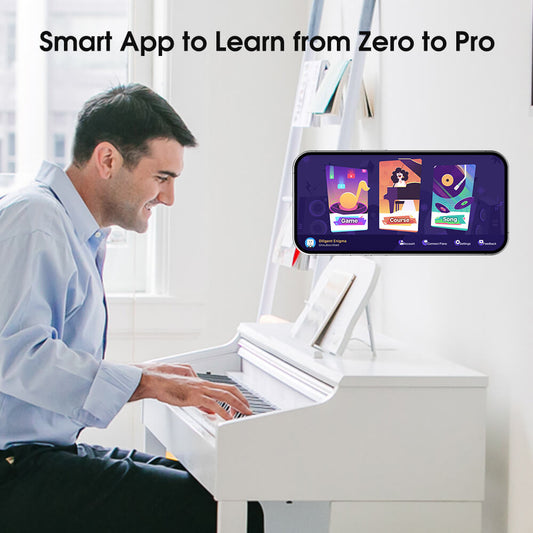
Compatible models can use the Smart Piano App for interactive scores, lessons, games, and practice tools. These features help learners understand what to work on next while allowing them to progress at a manageable pace.
App guidance is most effective when combined with regular attention to touch, timing, posture, pedal control, and listening. The technology supports practice without replacing the physical skills involved in learning piano.
Plan the Home Practice Area Before Choosing
Measure the intended location and allow enough room for the piano, bench, pedals, and comfortable movement. Consider access to power, headphone practice, nearby storage, and whether the instrument will remain in the same position long term.
Browse piano accessories for seating, headphones, and compatible setup essentials. Players who need an instrument that moves between rooms, rehearsals, or performances should compare the stage digital piano option instead.
The right upright model depends on playing level, preferred key response, sound expectations, available room, and how permanent the setup should feel. Choose the instrument that supports current practice while leaving enough room for future musical growth.


