
Small hands are usually described as a limitation, and on most instruments they are simply a fact. What causes the frustration is not hand size but the way a player compensates for it — stretching, gripping, and lifting the wrist to reach notes that are simply further apart.
This guide covers what small hands genuinely struggle with, why changing the instrument rarely fixes it, and the adjustments that do.
The models referenced are TheONE products; current specifications and pricing are shown on each product page.
What small hands actually struggle with
Three things, and only one is about the keys. Wide intervals, where an octave or a ninth needs a stretch. Chords held across several notes, where the hand has to maintain a position it cannot comfortably reach. And speed, because a hand at the edge of its span moves less efficiently than one with room to spare.
What small hands do not struggle with is the size of standard piano keys. Full-size keys are the same width on every piano, from a beginner keyboard to a concert grand, because that width is part of what makes technique transferable. A narrow keyboard would teach distances that do not exist anywhere else.
The compensating habits are what cause problems. When a chord is out of reach, a player typically rotates the wrist, lifts the shoulder, or presses harder, and all three create tension that shows up as fatigue rather than as an inability to play. Musicians' health organisations such as the Health and Safety Executive describe that pattern as the route to the strain injuries players report most often.
One more habit is worth building from the first week, and it costs nothing. Play with the hand slightly rounded rather than flattened, so the fingers can reach from the knuckle without the wrist rotating to help. A rounded hand covers more distance with less effort, and it is the position teachers spend the first months correcting in players who spent a year flattening their hands to reach chords. If a stretch only works when your wrist rotates or your shoulder lifts, the passage is beyond your present reach rather than beyond your ability.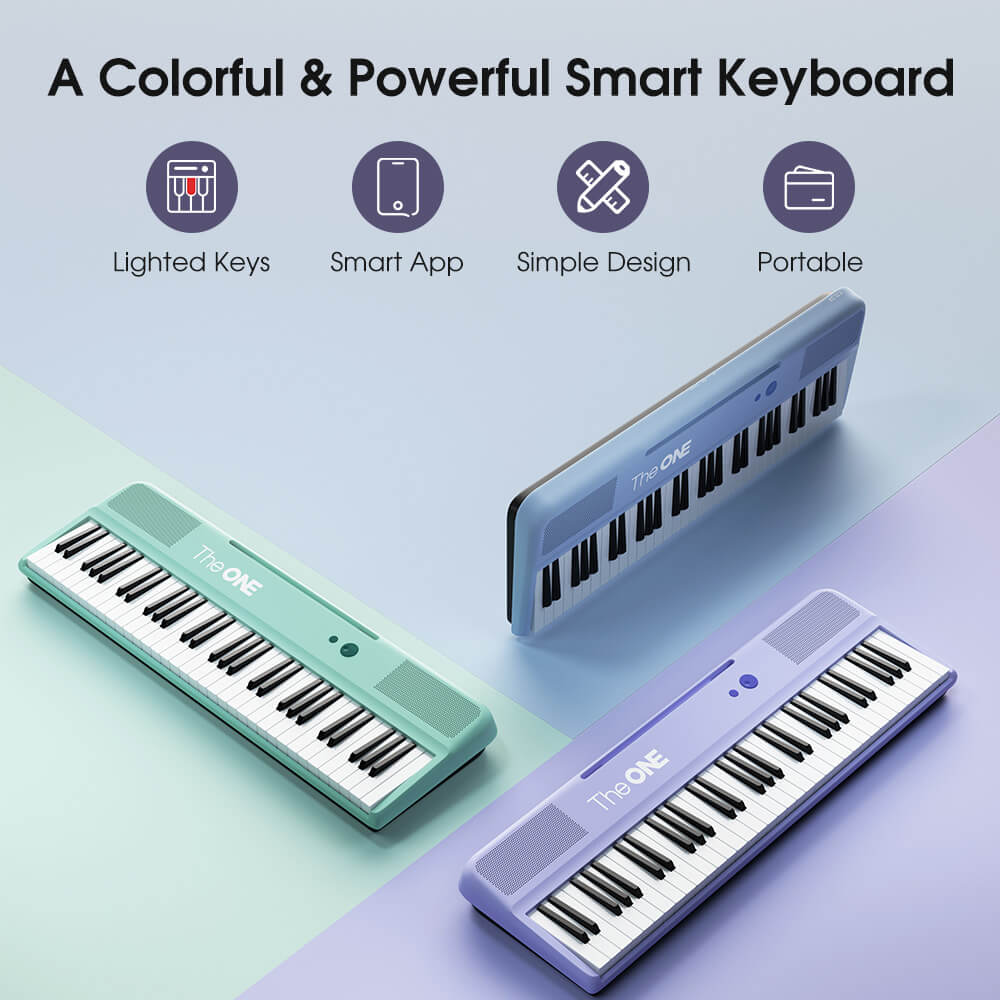
How do you choose a piano for small hands?
Choose on key action and setup, not key size.
Choose full-size keys with a light action and a keyboard that sits low enough to reach without stretching, and prefer pieces that stay inside a sixth until your reach relaxes.

The instrument that suits small hands is the one that lets you play without tension: a key action light enough to play without pressing, and a seat height that lets the hand rest rather than reach.
That means the decision is less about which piano and more about which position. Forearms level with the keys, both feet supported, and enough distance that the elbows are not pinned to the ribs. A hand at the edge of its span needs the rest of the arm to be free, and a player sitting too close has to do the reaching with the smaller muscles of the hand and wrist instead.
The second factor is the action itself. A weighted action gives feedback about how much force you are applying, which helps a player with a small hand avoid pressing harder than necessary. A light action does not give that feedback, so tension builds unnoticed. If your hands are small and you are choosing between two instruments, the one with more resistance is usually the kinder choice, provided it is not so heavy that playing becomes an effort.
Does key size vary between pianos?
No. Standard keys are the same width everywhere.
Between acoustic pianos the difference is small, and between digital models full-size keys are effectively standard, so reach is solved by technique and repertoire rather than by the instrument.
Occasionally you will see instruments with narrower keys marketed at smaller players, including children and adults with small hands. They are a genuine option in the acoustic world, and they come with a real trade-off: the distances your fingers learn are different from the ones every other piano will present.
For most players, that trade is not worth making. The habits that transfer are built on standard keys, and a player who learns on a narrower instrument has to adjust later. If hand span is genuinely limiting — for example, if an octave is uncomfortable rather than merely wide — the more useful change is repertoire and technique rather than the keyboard. Graded material such as the Royal Conservatory of Music levels is sequenced so that stretches widen gradually rather than arriving all at once.
What helps more than changing the instrument
Four adjustments, none of which costs anything. First, sit at the right height, because a low seat makes the hand reach upwards and that alone makes an octave feel wider. Second, move the bench back so the elbow is free to open slightly, which effectively increases your span. Third, roll chords rather than trying to strike every note simultaneously if the stretch is at your limit; this is a recognised technique, not a workaround.

Fourth, choose repertoire with your span in mind for the first year. Beginner material rarely demands more than a sixth or seventh, and reaching the octave is a skill that develops with relaxation rather than with forcing. The physical reasoning behind all four is the same as any seated task: a supported, neutral position allows more movement than a collapsed one, which is the principle the Canadian Centre for Occupational Health and Safety describes and research published in Frontiers in Psychology applies to repeated work.
It is also worth measuring your own span once rather than guessing at it, because most players underestimate what they can actually reach. Put your hand on the keys and let it relax, then see which interval the thumb and little finger fall on without stretching or rotating the wrist. That number, not the octave you can force, is the one to plan repertoire around for the next year. Re-measure it every few months, because a relaxed hand usually reaches further than a tense one by a surprising margin.Two habits are worth building early. Practise the stretch you find hardest for a minute a day rather than avoiding it, because avoidance is how a limitation becomes permanent. And check in with the hand after every session: if the outside edge aches or the wrist has dropped, the tension is coming from somewhere, and the NHS description of repetitive strain injury is a useful reminder that it is the repeated awkward position rather than the difficulty of the music that causes the problem.
What to avoid
Avoid very heavy actions if your hands are small, because a mechanism that needs force to move will encourage pressing rather than playing. Avoid a low seat, which is the single most common cause of unnecessary reaching. And avoid the assumption that small hands limit what you can eventually play: plenty of accomplished pianists have modest spans and manage it with rolling, redistribution between the hands and careful fingering.
What is genuinely worth checking before buying is the action and the height, in that order. The weighted vs touch sensitive keys comparison explains the first, and the piano bench height guide the second. If the piano is for a child, piano for a 6 year old covers the sizing questions that come with growing hands.
One more thing to avoid is advice that treats span as a fixed limit. Adults routinely gain usable range over the first year, not by stretching but by learning to release the hand, and players who assume they will never reach an octave stop attempting the intervals that would develop it. Measure your span, plan repertoire inside it, and re-measure in six months.
FAQ
Do small hands limit what you can play on piano?
Far less than most people assume. The repertoire that genuinely requires a ninth or tenth is a small part of what pianists play, and much of it can be rolled, redistributed between the hands or played on an instrument with a lighter action. What limits players more often is tension rather than span, because a hand that grips cannot stretch, and a hand that is relaxed can often reach a key it could not reach while tense. Span does improve with time and technique, though the change is gradual.
Are there pianos with smaller keys for small hands?
A few manufacturers offer reduced-size keyboards, and some conservatoires use them for young students, but they are uncommon and expensive in the digital market. For most players the better answer is a full-size keyboard with a light action, because reduced keys create a transfer problem when you later play a standard instrument. Digital models make this easier than acoustic ones, because the touch can be lighter while the key size stays standard, which is the combination small hands actually benefit from.
Should you practise stretches to widen your reach?
Stretching the hand beyond a comfortable span is not a reliable way to gain reach, and it is a common route to the discomfort described in the NHS material on repetitive strain injury. What does help is learning to release tension in the hand, rotating the forearm slightly for wide intervals, and choosing repertoire that sits inside your present span while it grows on its own. If a stretch causes sharp pain, it is not working. Discomfort that appears during play and disappears with rest is usually a technique and setup question first.
Next step
Measure your comfort rather than your span: sit at the right height, move the bench back a hand's width and see whether an octave feels different. Most players discover the problem was the setup, and that costs nothing to fix.
Shipping and returns in short. TheONE ships free within the 48 contiguous United States, with orders usually processed in 1–3 business days and delivery estimated at 3–7 business days after dispatch. International delivery is estimated at 5–15 business days, with shipping and applicable taxes included in the price shown at checkout. Returns within the United States can be requested within 30 calendar days of receipt and require approval.
See the models with full-size keys and the stands and benches that set the right height.
For the setup that does most of the work here, see piano bench height guide.


