
A child asks for piano lessons, and the advice arrives from every direction: start at four, start at seven, buy 88 keys, never buy 61. Most of it is guesswork dressed as experience, and the choices that actually matter for a child are narrower than the arguments suggest.
Three things decide whether a child's first piano works: whether they can physically sit at it properly, whether the guidance is strong enough to keep them practising between lessons, and whether the seat and stand grow with them. This guide covers those in order, with the setup details that adults usually get wrong.
The models referenced here are TheONE products, with specifications and prices taken from TheONE's product pages on 28 September 2026. This is not an independent test.
What age should a child start piano?
Most children can start between five and seven.
The limit is hand size and attention span rather than age on a calendar. A child needs to hold a curved hand position for a few minutes and manage a short session without being coerced, and both arrive at different ages in different children.
Two signs are more useful than a birthday. The first is that the child can sit at the instrument with both feet supported and reach the keys without leaning forward. The second is that they choose to return to it, which usually means a session of five to ten minutes rather than twenty. Children who practise briefly and often outperform those who sit for longer because an adult is watching.
If those signs are not there yet, waiting costs nothing. Rhythm skills develop through singing, clapping and marching, and a child who has a strong sense of pulse will move faster when formal playing starts. The same reasoning applies to drums, which are covered in electronic drum set for kids.
Do children need 88 keys?
Rarely at first.
Beginners of any age stay in a five-finger position inside the middle of the keyboard, and the first method books never leave a 61-key range. The 88-key question belongs to the point where graded repertoire arrives, usually years later.
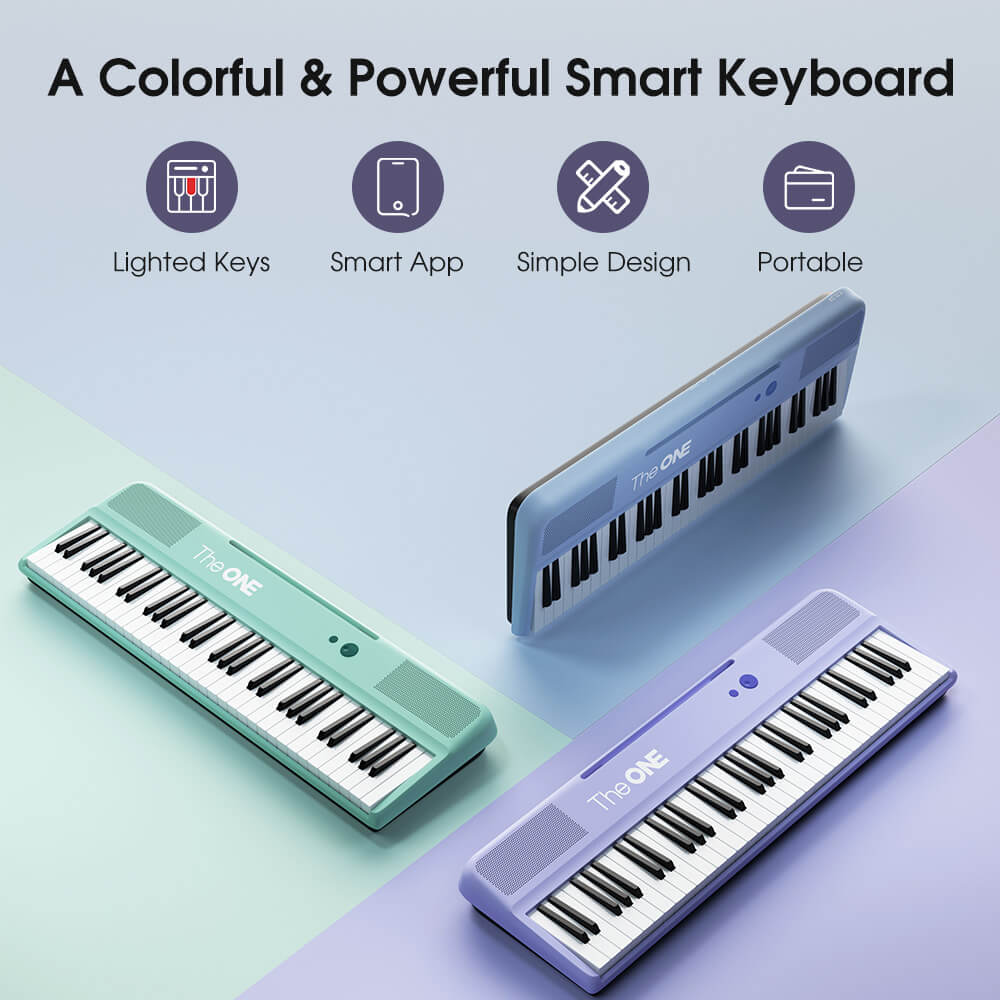
The argument for starting small is practical rather than financial. A 61-key portable model weighs 7.7 lb, runs on AA batteries and can sit on a stand in a bedroom or move to the kitchen table. That flexibility matters more to a child than key count, because practice happens wherever the family already is. The argument against starting at 88 keys is that a 107 lb instrument in a small room is a commitment made on a child's behalf, and children change their minds.
The exception is a family that has already committed to lessons and graded exams with a teacher who has specified a full-range instrument. In that case the decision has been made by someone with more information, and the right move is to follow it rather than to optimise the purchase.
Is a smart piano good for a child learning alone?
Better than a silent keyboard, though not a teacher.
It shows the next note on the key itself and marks the bars that went wrong, which is precisely what a parent who does not read music cannot do. The data behind it is note information rather than audio, sent as MIDI performance data over Bluetooth, with a cabled USB option on Android devices that support USB host. It cannot see hand position or posture, so an occasional lesson still helps.
What the guidance changes for a child is the gap between lessons. A teacher corrects once a week; the six days in between are where habits form, and left alone a child either practises the same favourite passage or stops. An app that sets a target and reports back fills that gap, and the lit keys mean the child can start before reading notation is fluent.
Two safeguards are worth building in. First, make sure the child plays pieces without the lights, or the skill being practised becomes following rather than playing; the mechanism is explained in do light up keys help you learn. Second, keep the headphone volume low enough that the child can hear you across the room, because a daily habit is exactly the kind of cumulative exposure the NIDCD's guidance on hearing loss and the WHO listening-safety programme are written about.
Setting it up for a growing player
Children grow several centimetres a year, so the setup matters more than for an adult. Two measurements do the work: the seat height should put the child's forearms roughly level with the keys, and both feet should be supported rather than dangling, because a child whose feet hang will slide back and lean forward to compensate.
The adjustable parts are cheap and worth buying at the same time as the piano. The single-X stand fits the 61-key COLOR and adjusts for children and adults sharing it, at $119; the double-X stand fits both the 61-key and 88-key models at the same price and folds away. A bench at $149 gives a stable seat at the right height rather than a dining chair that happens to be nearby, and the checks for the seat are set out in the piano bench height guide.
| Age band | What fits | What to avoid |
|---|---|---|
| Five to seven | 61-key portable keyboard on an adjustable stand | A permanent 88-key piano in a shared room |
| Seven to ten | Same keyboard, plus printed music alongside the app | Sessions long enough to cause fatigue |
| Ten and up | 88-key weighted model if lessons are continuing | Buying 88 keys as a reward before the habit exists |
The pattern is to let the instrument grow with the habit rather than ahead of it. A child who has practised for two years on a portable keyboard is a different proposition from one who asked about lessons last month, and the second child does not need a home piano yet.

What keeps a child practising
Short sessions, a visible target, and some choice over the music. Children sustain practice when they can see what "done" looks like for the day, which is what a guided session provides, and when at least part of the material is music they asked for. An app library helps with the first; the second is a conversation rather than a purchase.
Two habits from the adult side translate directly. Keep sessions short and frequent — ten minutes most days, as set out in the piano practice routine for beginners — and let the child finish on something they enjoy, so the last memory of the session is a good one. Praise the specific rather than the general: "that bar was steady" teaches more than "well done".
And resist upgrading before the habit is visible. The most useful signal that a child is ready for a weighted 88-key piano is not age or enthusiasm; it is that they have been practising without being reminded for a few months. Until then a portable keyboard on an adjustable stand is not a compromise, it is the correct instrument.
FAQ
What age should a child start piano?
Most children can start between five and seven. The limit is hand size and attention span rather than age: a child needs to hold a curved hand position for a few minutes and manage a short session. Before that, singing and clapping games build the same sense of pulse at no cost.
Do children need 88 keys?
Rarely at first. Beginner material for children stays inside a five-finger position and well within a 61-key range, so a portable model covers the first years. The 88-key decision belongs to the point where graded repertoire arrives, which is usually several years in.
Is a smart piano good for a child learning alone?
It is better than a silent keyboard, because it tells the child what to play and marks what went wrong, which is what an adult at home often cannot do. It does not replace a teacher for hand position and posture, so a lesson every few weeks still helps.
Next step
Measure the child before you compare models: seat height, feet supported, and whether they can reach the keys without leaning. If any of those fail, adjust the stand and seat first, because a child at the wrong height will practise less regardless of which piano is in the room.
Shipping and returns in short. TheONE ships free within the 48 contiguous United States, with orders usually processed in 1–3 business days and delivery estimated at 3–7 business days after dispatch. International delivery is estimated at 5–15 business days, with shipping and applicable taxes included in the price shown at checkout. Returns within the United States can be requested within 30 calendar days of receipt and require approval.
See the portable and weighted pianos children can start on, with the stands and benches sized for them.
If you are deciding between a portable keyboard and a home piano, best smart piano for beginners sets out the shortlist. For labels and lights, piano key stickers compares the two.


