
The question comes up after the third video: the keys glow, the app corrects, and the price is a few hundred dollars above a plain digital piano with the same specification. Either that money buys something real, or it buys a feature that stops mattering in a month.
The answer depends almost entirely on whether someone else is going to correct your playing. This guide sets out what the money actually buys, where the value stops, and which buyers should put the same budget into key action instead.
Models and prices referenced here come from TheONE's product pages on 28 September 2026. This is not an independent test.
What you are actually paying for
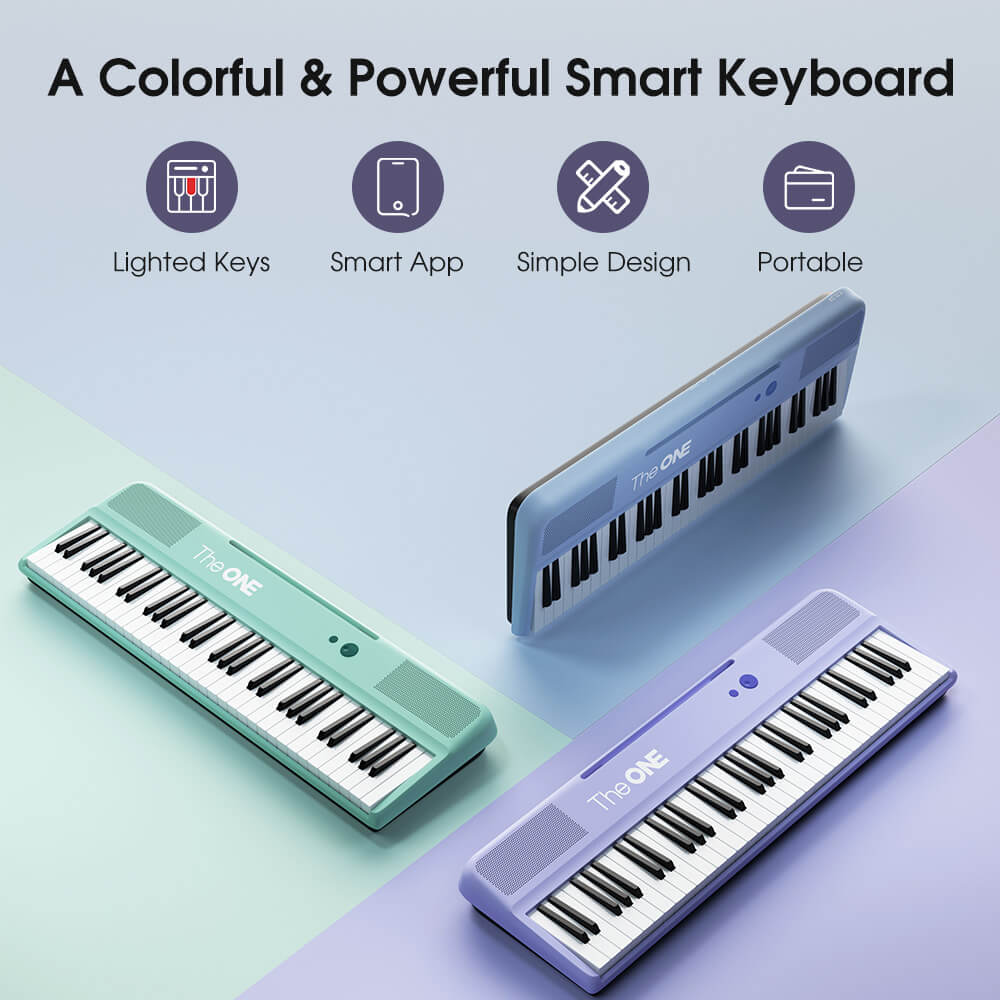
Three things, and only one of them is a service. The first is hardware: keys that light individually, which is what allows the instrument to show you the next note without a screen. The second is the feedback loop, an app that receives what you played and marks where it differed from the score. The third is the guided content that fills that loop with lessons and songs.
The first two are permanent. Lights and sensors are part of how the instrument is built, and they keep working as long as the piano does. The third has a time limit: on TheONE instruments the portable models include three months of the learning app and the console and upright models include six. That distinction matters more than any other when you are deciding whether the premium is worth it.
It helps to compare the cost against the thing it replaces. A teacher who corrects note accuracy and timing once a fortnight costs more in two months than the entire price difference between a portable smart keyboard and a plainer one. What the teacher adds and the app cannot is judgement about how it sounded, which is the subject of piano that teaches you how to play.
Are smart pianos worth the money?
Yes for a self-taught beginner; less so otherwise.
If nobody is correcting your playing weekly, the guidance is doing a teacher's job for the first year, and at that point the premium is good value. The information the app acts on is note, timing and velocity data, the same MIDI performance data a controller sends, carried over Bluetooth. If a teacher already listens to you, the same money buys more as key action.
There is a second audience that gets clear value: households where practice has to be quiet or brief. A digital instrument of any kind solves the volume problem, but the guidance solves the different problem of a learner who sits down without knowing what to do. Fifteen minutes with a structured session produces more than fifteen minutes of playing the same four bars, and that difference compounds across a year.
The buyer who gets least from the premium is the one who already reads music and practises from printed scores. For them the lights duplicate a skill they have, and the app's library competes with material they have chosen deliberately. That buyer should spend the difference on the weighted action instead, because resistance is the part that cannot be added later.
What the premium does not buy
It does not buy a better key action. That is worth stating plainly because the categories are independent: a light-action keyboard with lights and an app is still a light-action keyboard. On TheONE's range the touch-response 61-key COLOR starts at $325 while the graded hammer action 88-key PLAY starts at $1,599, and the gap between those two is about the mechanism rather than the software.
It does not buy sound quality either, for the same reason. Tone comes from the sample set and, above all, from the speakers you play through, which is why the specification worth reading is the speaker system rather than the number of instrument voices. A model with four speakers and two 20W tweeters will sound fuller in a room than one with a longer voice list and two small drivers.
And it does not remove the need for a setup that suits your hands. A piano at the wrong height will still cause tension, guided or not, and the fixes cost little: a stand at the right height and a bench rather than a dining chair. The measurements are in the piano bench height guide. Headphone level matters too, because cumulative exposure is what the NIDCD guidance on noise-induced hearing loss and the WHO listening-safety programme describe.
Smart piano or plain digital piano
The table compares the two on the four things that decide whether a beginner keeps playing. Prices are in US dollars, checked on 28 September 2026.
| Plain digital piano | Smart piano | |
|---|---|---|
| Keys light up | No | Yes, individually |
| Feedback on what you played | Only from a teacher or your own ear | From the app, in real time |
| Guided content | None included | Three months portable, six months on console and upright models |
| What to spend the extra on | Key action and speakers | The mechanism, not the software |
| Typical entry price (US$) | Depends on the specification | $325 on the TheONE COLOR |
Read the table as a question about correction. Every skill you practise without feedback becomes permanent in whichever form you practised it, so an hour a week of uncorrected repetition is not neutral; it is actively teaching your hands the wrong version. If nothing else in your week provides correction, the smart premium is buying something a plain instrument cannot.
When a smart piano is the wrong purchase
Three cases. The first is a player who already reads fluently and works from printed music, for whom the guidance duplicates existing skills. The second is a household where the piano will be played by several people of different levels, because the guidance is calibrated to one learner at a time and the instrument's own specification matters more.
The third is the buyer who is attracted by the content volume rather than the instrument. A model sold on the size of its song library is being sold as a subscription, and the piano underneath it still has to be something you want to touch every day. If the key action is not right, no library compensates.
Wait instead if you are undecided about piano as an instrument, or if a teacher has specified a particular model. In both cases the decision is not yours to make alone, and smart piano vs traditional piano covers the acoustic alternative if that is what the teacher has in mind. Graded material such as the Royal Conservatory of Music levels is a useful map of progression to hold alongside whatever the app provides.
FAQ
Are smart pianos worth the money?
For a beginner learning without a teacher, usually yes, because the guidance replaces the correction they would otherwise pay for. For someone who already reads music or has weekly lessons, the extra usually buys less than the same money spent on key action.
What do you actually pay for in a smart piano?
Three things: individually lit keys, an app that receives what you played, and an included period of guided content. The first two are hardware and software built into the instrument; the third is a service with a time limit, which is why the entitlement is worth checking.
Do smart pianos become useless when the app subscription ends?
No. The instrument keeps playing through its speakers and headphones, keeps its key action, and keeps its connections to other software. You lose the guided lessons and the library, so the risk is not a dead piano but a learner who never learned to practise without instruction.
Next step
Answer one question before you compare prices: is anyone going to correct my playing this year? If the answer is no, the guidance is doing real work and the premium is justified. If the answer is yes, put the difference into the key action and buy the plain instrument with better keys.
Shipping and returns in short. TheONE ships free within the 48 contiguous United States, with orders usually processed in 1–3 business days and delivery estimated at 3–7 business days after dispatch. International delivery is estimated at 5–15 business days, with shipping and applicable taxes included in the price shown at checkout. Returns within the United States can be requested within 30 calendar days of receipt and require approval.
Compare the guided models and the weighted pianos on one page, with the app entitlement shown for each.
If you want to know how the guidance behaves in practice, see do light up keys help you learn. For the category boundary itself, smart piano vs digital piano explains what makes an instrument smart.