

Knowledge
Beginner Piano Chords for Accompanying Your Voice
Useful accompaniment chords are the ones you can change cleanly while keeping a pulse. Start with a small set in one key and keep...
Learn, choose and care for your instruments with confidence.
Shop Now
Latest from the studio
Knowledge
Useful accompaniment chords are the ones you can change cleanly while keeping a pulse. Start with a small set in one key and keep...

Knowledge
A singer should choose 61 or 88 keys by repertoire, accompaniment style, key action, available space and transport needs. Vocal range alone does...
Knowledge
Motivation grows when a child can see what a session is for and can finish with a small musical result. A predictable routine...

Knowledge
Light-up keys can make the first song less intimidating. They help only when guidance is gradually reduced and the child also practises pulse,...

Knowledge
Age is only one part of a musical gift decision. Match the child’s interests, physical setup and adult support after the gift is...
Knowledge
A small practice space succeeds when it makes beginning easy and leaves room for safe movement. It does not need to look like...
Knowledge
There is no universal safe percentage on a volume slider. Actual exposure changes with the device, headphones, recording and room, so start low,...
Knowledge
A child does not need a certain key count because of age. Choose the range that matches the next music task, the available...

Knowledge
Fifteen minutes can produce useful work when the session begins with a prepared target. It is not enough time to wander through every piece,...
Knowledge
Piano hand coordination is not one ability that suddenly appears. It is the combination of separate hand patterns, shared pulse, attention shifts and planned...

Knowledge
Self-taught piano learners often make progress before they know which habits will become limiting. The solution is not to distrust independent learning. It is...
Knowledge
A beginner piano setup should make correct practice easy to repeat. The instrument matters, but so do key height, bench distance, pedal stability, screen...
Knowledge
Piano chord practice should develop reliable shapes, smooth movement and listening—not a stronger grip. Pressing harder after the keys sound does not improve the...
Knowledge
Piano progress is easier to trust when it is attached to a defined task and repeatable evidence. “I feel better” and “I completed ten...
Knowledge
Light-up keys can help a learner find notes, begin patterns and experience early success. Whether they build lasting piano skills depends on what happens...
Knowledge
Moving from light-up keys to sheet music does not require abandoning guidance overnight. The reliable transition is to connect each physical cue with a...
Knowledge
App compatibility is a chain, not a yes-or-no phone feature. The piano model, app version, operating system, device port, Bluetooth capability, cable or adapter,...
Knowledge
You can learn piano at home when the plan covers five things: a suitable instrument, a stable physical setup, a sequenced curriculum, regular feedback...
Knowledge
You can learn piano without a weekly teacher, but you cannot remove the need for sequence, observation and correction. A self-directed learner must deliberately...

Knowledge
Bluetooth MIDI and Bluetooth audio may use the same wireless logo, but they send different information. MIDI transmits performance instructions such as notes, timing...
Knowledge
Light-up keys and on-screen notes solve different beginner problems. Lights point to a physical location; screen notation shows musical information and encourages the learner...
Knowledge
Real-time piano feedback compares part of your performance with an expected result. Depending on the connection and app, it may detect pitch, timing, duration...
Knowledge
A piano app, a teacher and YouTube can all contribute to learning, but they do different jobs. Apps provide sequence and instant selected feedback....
Knowledge
The right piano learning app is not the one with the longest song list. It should teach the skills you want, recognize your instrument...
Start with a topic
Choose the area that matches what you are learning, buying or setting up.
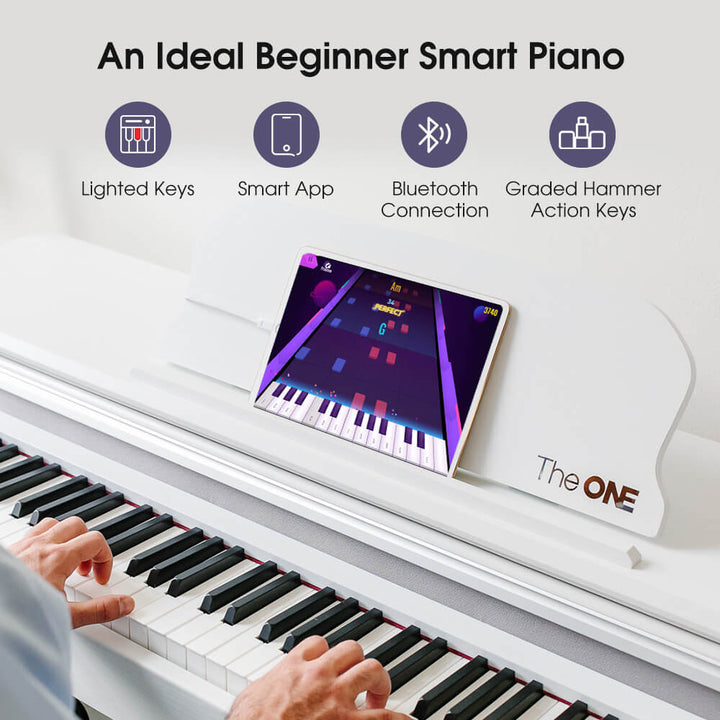
Build technique, reading, rhythm and confidence through practical learning paths.
Open guide →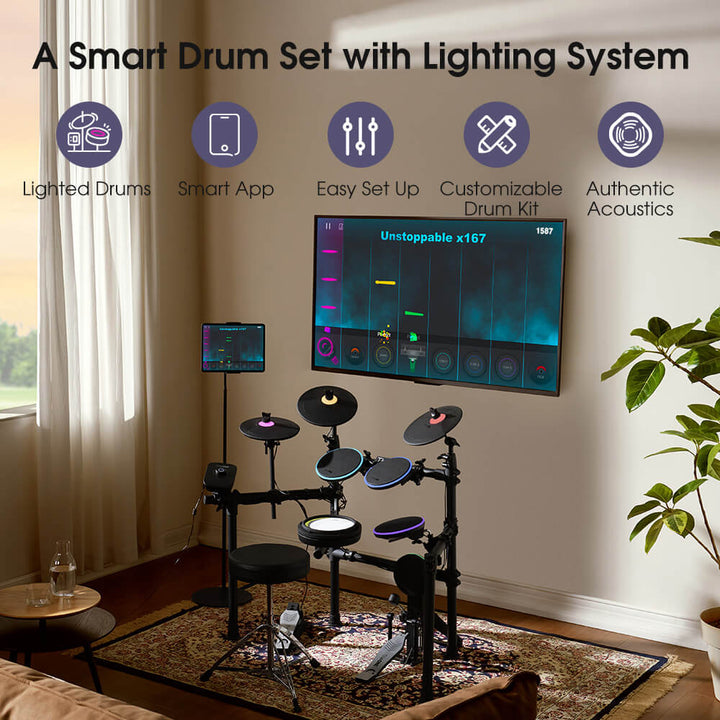
Choose, set up and practise with electronic drums at home.
Open guide →Use connected lessons and practice tools without letting the app replace deliberate practice.
Open guide →Compare key action, sound, speakers, size and connectivity before choosing.
Open guide →Place, connect, clean and maintain your instrument for reliable everyday use.
Open guide →Built around real instruments
Every guide is organized around a practical decision: what to practise next, what features matter and how to keep an instrument working well.
Browse The ONE instruments →
Check out the FAQs


Start the chat now