
A digital piano for online lessons must work as both an instrument and a repeatable video-call setup. Prioritize a suitable key action and pedal, then make sure the teacher can see posture and hands, hear the instrument clearly, and communicate without complicated cable changes. An excellent piano in a poor camera-and-audio arrangement can make remote feedback unnecessarily difficult.
Online-lesson essentials
- Key range and action appropriate to the course and teacher.
- Stable stand, adjustable bench and dependable sustain pedal.
- Headphone and speaker options that fit the lesson platform.
- A side-front camera view showing hands, wrists and posture.
- Simple audio and device placement that can be restored every week.
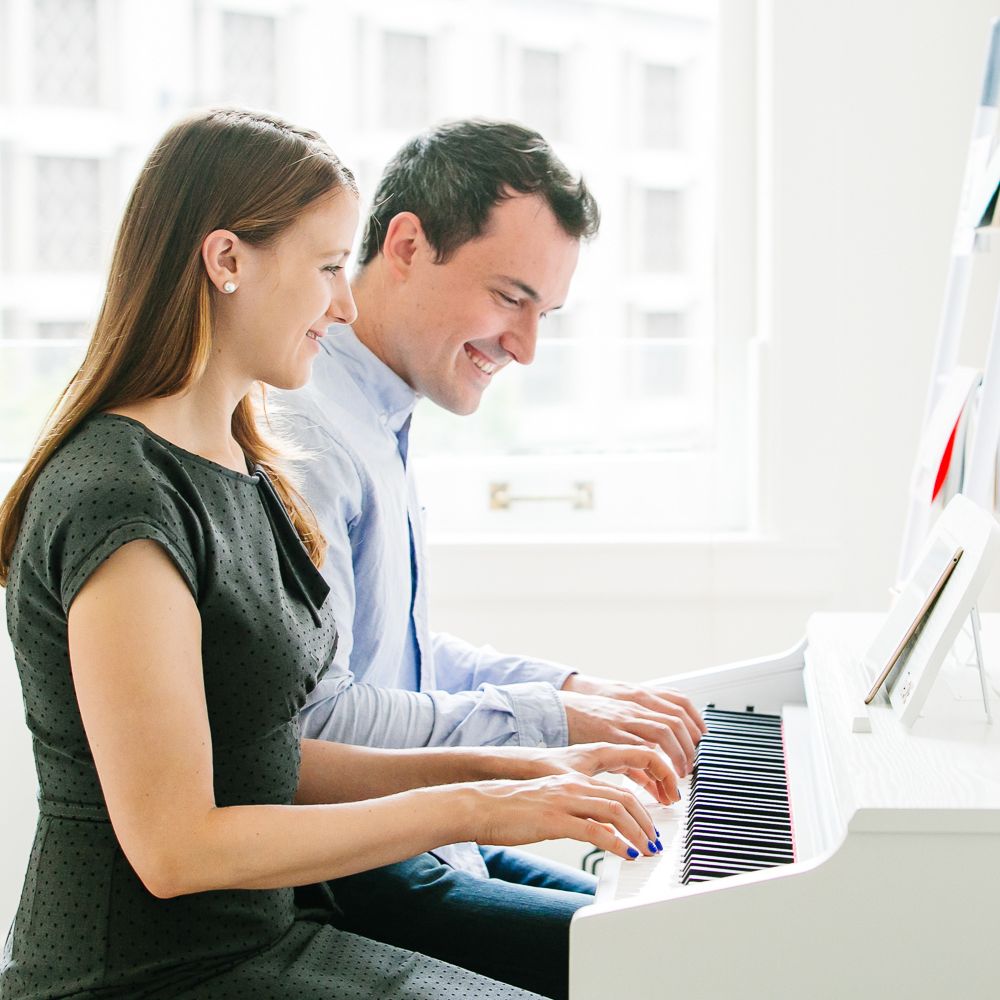
Start with the teacher’s requirements
Ask what repertoire, key count, action and pedal functions the course expects. A 61-key portable keyboard may support early lessons and chords, while an 88-key weighted action is usually the more durable choice for traditional piano study. The teacher’s method should decide before App features or decorative controls.
Can the teacher see enough to correct technique?
Plan a side-front view that includes both hands, wrists, part of the arms and enough torso to assess posture. A top-down view shows fingering but hides shoulder and bench alignment. The device must sit securely without narrowing the music rest or forcing the learner to twist.
Check the frame while playing the lowest and highest notes used in the lesson. A camera position that works only near middle C may fail during repertoire.
How will the teacher hear the piano?
| Method | Advantage | Tradeoff to test |
|---|---|---|
| Call-device microphone hears piano speakers | Simple setup | Voice processing may change sustained piano sound |
| Direct audio/interface path | Cleaner instrument signal | More routing and possible monitoring complexity |
| Second device for close audio | Flexible camera placement | Echo unless only one device handles call audio |
| Headphones for private practice | Quiet between lessons | Teacher still needs a deliberate way to hear the instrument |
Test the complete lesson, not only the piano
- Place the piano, bench, pedal and music at normal practice positions.
- Mount the call device and connect its charger safely.
- Start a test call with another person.
- Play soft notes, loud chords, scales and sustained pedal passages.
- Speak while the last chord rings to test voice and piano balance.
- Switch between playing and listening without moving cables.
- Repeat the setup from a powered-off state and time how long it takes.
Which piano features make weekly lessons easier?
Useful features can include a stable music rest, accessible headphone outputs, USB MIDI or documented audio connectivity, recording for homework, a metronome and controls that do not require deep menus. App-guided practice can support work between lessons, but it should not interfere with the teacher’s assigned method.
Build a setup the learner can repeat alone
Mark the stand and camera position, bundle cables safely and save the normal call-audio choice. The learner should be able to begin a lesson without an adult rebuilding the room or navigating an audio interface. Complexity that cannot be restored consistently becomes lost lesson time.
Keep the music, pencil, charger and headphones within reach but outside the key and pedal movement. Use lighting from the front or side so the teacher can see the hands without glare from a tablet screen.
Check the room and accessory cost
Include bench, stand or cabinet, pedal, headphones, device holder, cables, lighting and any interface in the real budget. Leave safe space for power and pedal cables. A portable piano still needs a rigid stand and appropriate seat height for consistent technique.
Run a first-week lesson test
- Join a test call from the normal room and network.
- Ask the listener whether speech and sustained piano notes remain intelligible.
- Play at the lowest and highest registers used in current lessons.
- Show a scale, chord and pedal passage while checking the camera frame.
- Mute and unmute once, then return to playing without rerouting cables.
- Record the setup positions and fix the first repeated failure.
If the teacher uses a particular platform or second camera, test that exact arrangement before the return period ends.
Frequently asked questions
Do you need an audio interface for online piano lessons?
Not always. Start with a test call using the simplest speaker-and-microphone setup, then add equipment only when the teacher cannot hear useful detail.
Is Bluetooth audio a good lesson-monitoring path?
It can add delay and routing complexity. A wired path is easier to diagnose when live timing matters.
Should the camera be directly above the keys?
Not as the only view. A side-front angle usually provides more posture information.